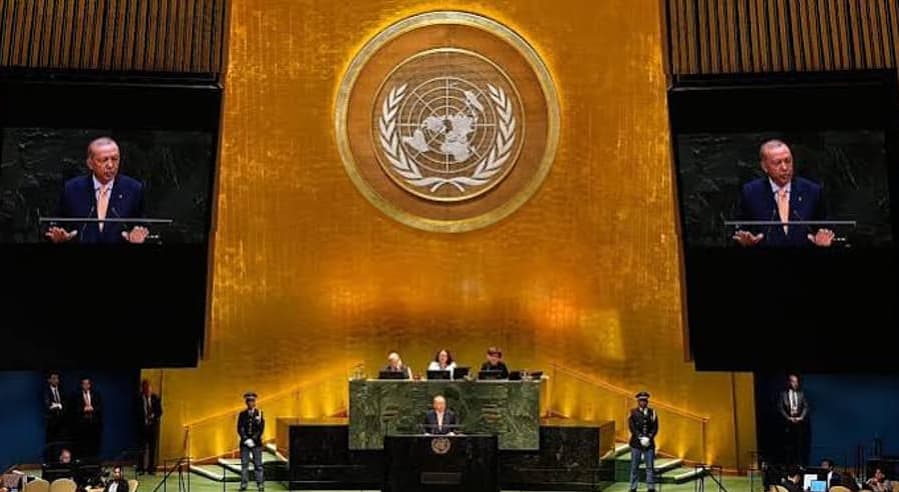
Prof. Dr. Mesut Hakkı Caşın, writing for the Turkish defense analysis platform C4Defence, has questioned the United Nations' ability to prevent a third world war. His analysis argues that the UN's founding philosophy was built on maintaining peace through a balance among great powers, but that the institution's legitimacy has eroded due to Security Council paralysis and major states disregarding international law.
Why it matters
- The gap between UN values and geopolitical reality is narrowing its capacity to produce solutions.
- As the risk of global war rises toward 2026, the institutional reform agenda remains blocked.
- UN Secretary-General António Guterres's warning that "fault lines are widening" and Turkish President Recep Tayyip Erdoğan's criticism of the "arbitrariness of five countries" are presented as signs of systemic collapse.
Caşın traces UN history from the League of Nations to the present through the lens of great-power rivalry and the destructiveness of war. He notes that the Treaty of Versailles, the Kellogg-Briand Pact, and the 1945 founding process were attempts to bind war to law, but argues these mechanisms have failed in both the post-Cold War unipolar era and today's multipolar disorder.
Why it matters for Turkey
The analysis concludes that the UN in its current structure cannot assume deterrence and peacekeeping functions, and that preventing a new world war in the 2026–2027 period requires Security Council reform and a return by great powers to international law. For foreign readers, this reflects a broader Turkish defense and foreign-policy debate about whether multilateral institutions can manage great-power competition, and whether Ankara should rely more on national defense capabilities and bilateral security arrangements as institutional guarantees weaken.
Source: C4Defence