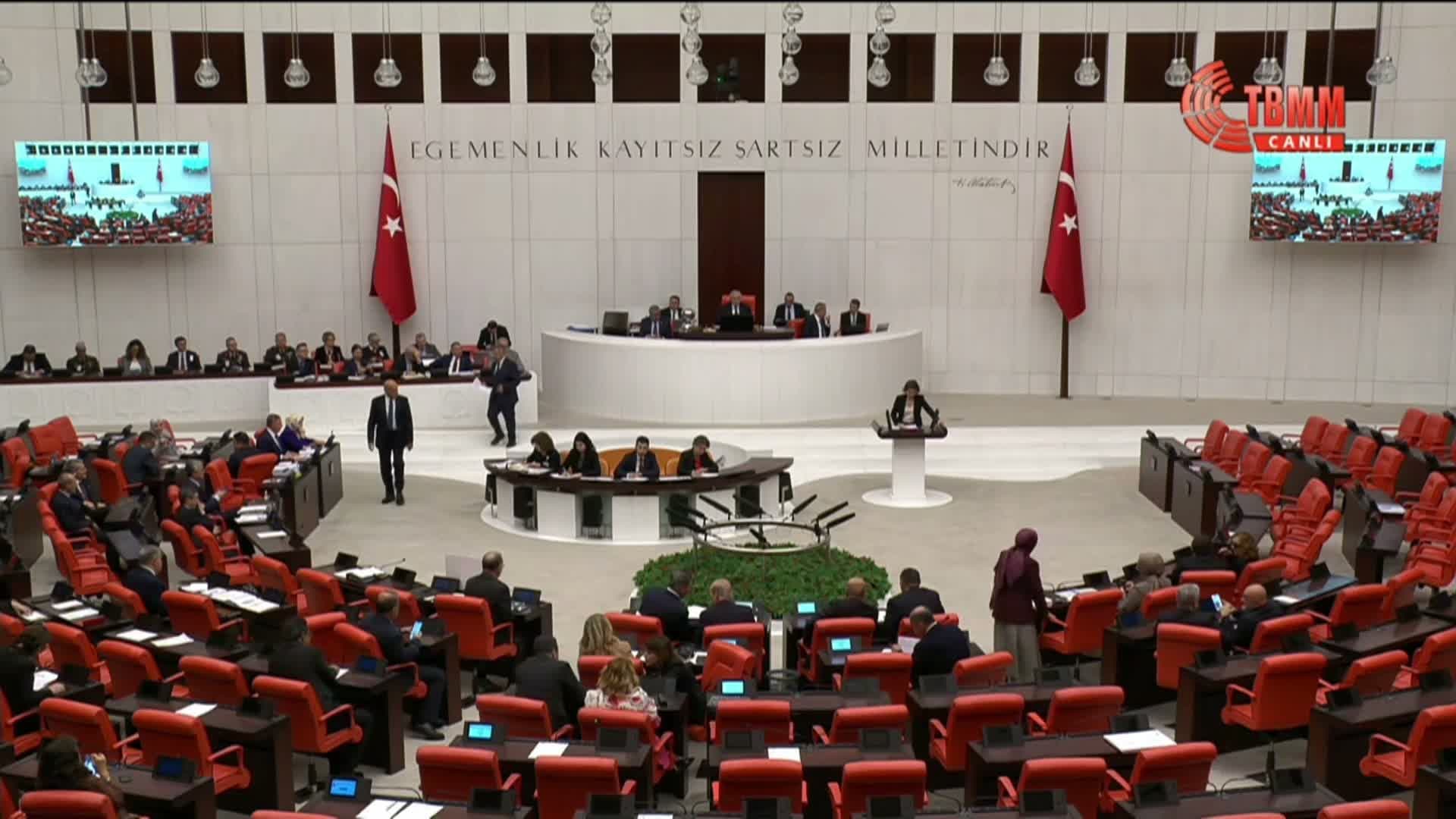
Turkey's Grand National Assembly (TBMM) is debating a bill to ratify the Mecca Joint Defense Agreement, a trilateral defense pact signed between Turkey, Pakistan, and Saudi Arabia.
Why it matters
- The main opposition Good Party (İYİ Parti) argues that Article 16 blocks withdrawal for the first ten years, locking Turkey into uncertain military obligations amid Middle East volatility and Pakistan-India tensions.
- The Peoples' Equality and Democracy Party (DEM Parti) rejected entering war "with eyes closed," calling for clearer parliamentary oversight and explicit rules on troop deployment.
- The New Welfare Party (Yeniden Refah Partisi) demanded greater transparency and a defined scope of military commitments.
Good Party lawmaker Lütfü Türkkan warned that restricting flexibility for a decade is risky given rapid regional changes. Metin Ergun of Muğla questioned why the deal, described as entirely military in nature, was not reviewed by the National Defense Commission. He also criticized language treating an attack on one party as an attack on all, and aid provisions left vague under "possibility and capability." DEM Parti's Ceylan Akça Cupolo stressed the dangers of military alignment without democratic oversight. The Nationalist Movement Party (MHP) expressed support for the agreement.
Why it matters for Turkey
The pact frames Turkey within a security architecture involving two nuclear-armed states—Pakistan and potentially Saudi Arabia—and a volatile Middle East. Without clarified trigger conditions, defined aid scope, and parliamentary oversight, Turkey risks automatic involvement in an unwanted war sparked by a unilateral incident or regional crisis.
Source: ankahaber.net