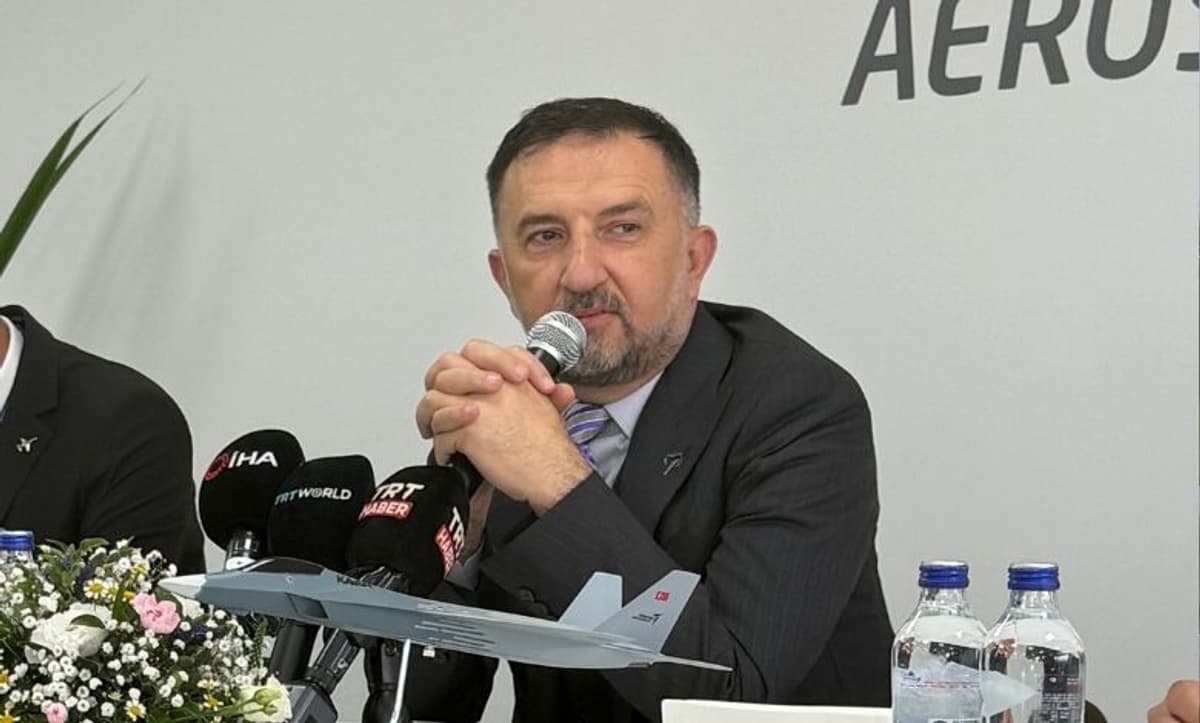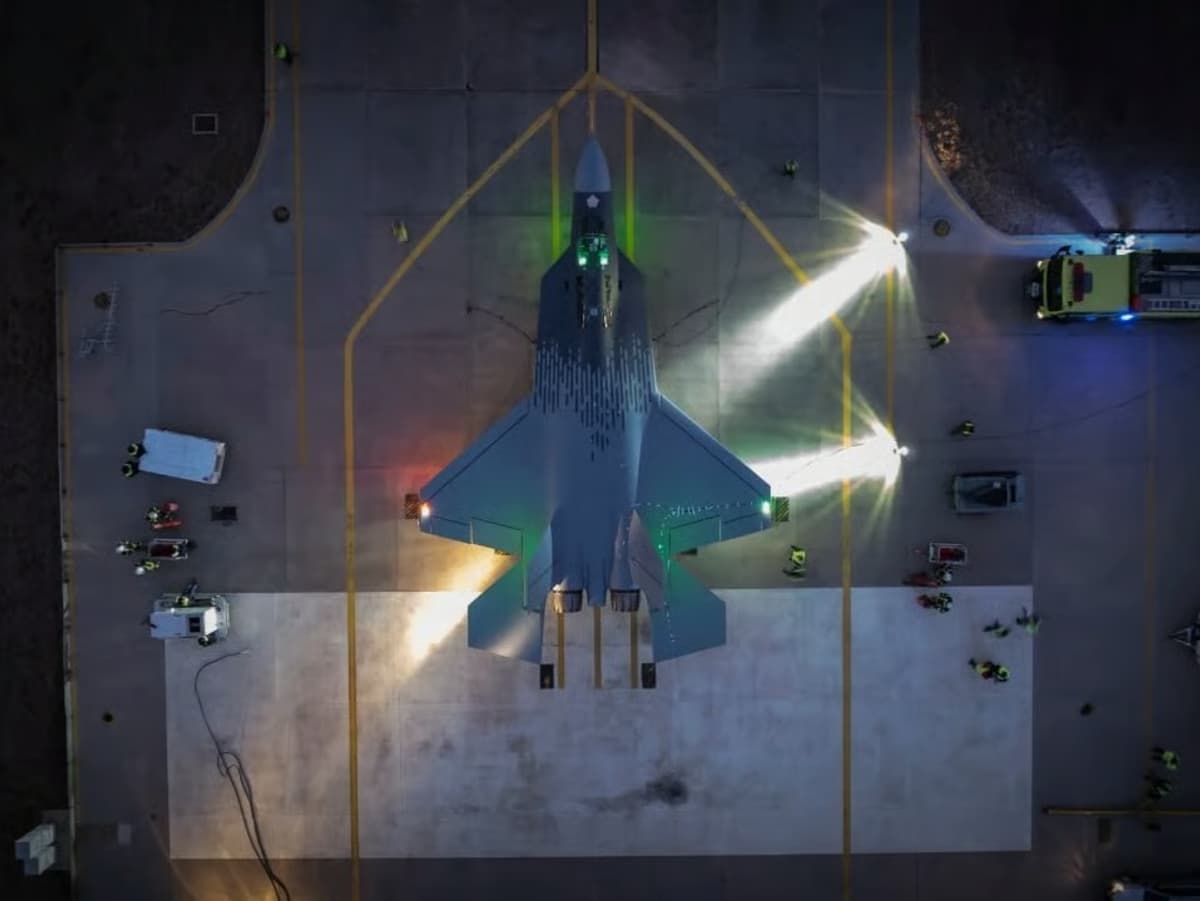


Turkish Aerospace is showcasing its new stealth-configured unmanned aerial vehicle named “GÖLGE” at the SAHA 2026 International Defence, Aerospace and Space Industry Fair. Designed with a low observable configuration, the platform is intended primarily for intelligence, surveillance, reconnaissance and electronic warfare missions.
GÖLGE features a wingspan of 5 meters and a maximum take-off weight of 100 kilograms, including a payload capacity of approximately 15 kilograms. The UAV can carry an electro-optical/infrared (EO/IR) payload, which is designed to retract into the fuselage in order to preserve the aircraft’s low observable characteristics.
The platform is powered by a foreign-origin 14-horsepower propeller engine. According to officials, the decision to use a propeller-driven engine instead of a jet engine despite the stealth-oriented design was driven primarily by fuel efficiency considerations. Due to the compact airframe and 5-meter wingspan, the aircraft cannot accommodate large fuel volumes internally, while a jet engine would significantly increase fuel consumption and reduce operational endurance.
GÖLGE is capable of line-of-sight datalink communication and control at ranges of up to 100 kilometers. The UAV reportedly has a maximum operational range of 1,300 kilometers and can remain airborne for up to 10 hours. The platform is also capable of autonomous flight along pre-planned routes.
The UAV is launched pneumatically from a vehicle-based launcher and recovers via parachute landing onto its fuselage. Officials noted that efforts are ongoing to integrate an airbag system beneath the fuselage in order to reduce the risk of structural damage during landing.
The platform can also reportedly be configured for electronic warfare missions. Officials stated that by sacrificing some fuel capacity, additional mission equipment such as ESM or radar direction-finding systems could be integrated onto the UAV.
GÖLGE has already completed its test activities and is described as a ready product. Deliveries are expected to begin this year, with a total of six systems planned for delivery to three undisclosed users, with two units allocated to each customer.